|
|
Contact Us
|
||||||
|
|
|
|||||||
|
|
1967 |
SHELBY RESEARCH GROUP | ||||||
|
|
|
|
||||||
|
|
|
|
|
|
|
Contact Us
|
||||||
|
|
|
|||||||
|
|
1967 |
SHELBY RESEARCH GROUP | ||||||
|
|
|
|
||||||
|
|
|
|
|
|
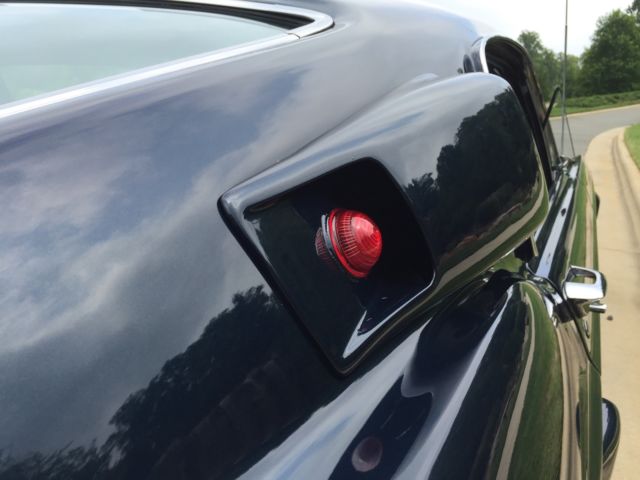
Eye-Level Brake and Turn Signal Lights, often referred to as 'scoop lights' or 'upper scoop lights' (USLs) by today's enthusiasts, were factory-installed to approximately 160 of the earliest '67 Shelby GT units 'completed' by Shelby American.
They're a rare and sought-after feature with lineage to Shelby's racing involvement in the Daytona Coupe and Ford GT40 programs. The two most common questions regarding these lights are how did they function and which cars received them? Early sales literature referred to these as "Eye-Level Brake and Turn Signal Lights." Other documents confirm their application and clarify when and how the mandate came down to deprecate them. Some folks have misunderstood the purpose of the lights, how they were wired, and as a result, mistakenly called them 'running lights.' The lights were present on the two pre-production advertising cars (Red 'GT 500' #V738-2 and Lime 'GT 350' #0176) and on regular production units from the launch. The light assemblies pictured on the two advertising cars were different from the regular production cars. The lights seen on the advertising cars appear to be made by Lucas with a chrome bezel at the base. The Lucas version could also be found on the Cobra Daytona Coupes and Allard automobiles. The regular production cars received Dietz lights (no chrome bezel at the base), which were also commonly found on trailers. Like most running changes (RCs), it has been tough to pinpoint exactly when these lights were discontinued. Luckily, through decades of data-gathering by Dave Matthews, JD, Rich Plescia, and others, we have been able to organize and summarize this data. As with all research, and especially when it comes to '67 Shelby GT cars, there are always exceptions. The document titled "Product Letter 67-1," subject "Eye-Level Brake and Turn Signal Lights - 1967 Model GT 350/500," was drafted by Frank Martin on December 2, 1966, and sent to department managers. It read:
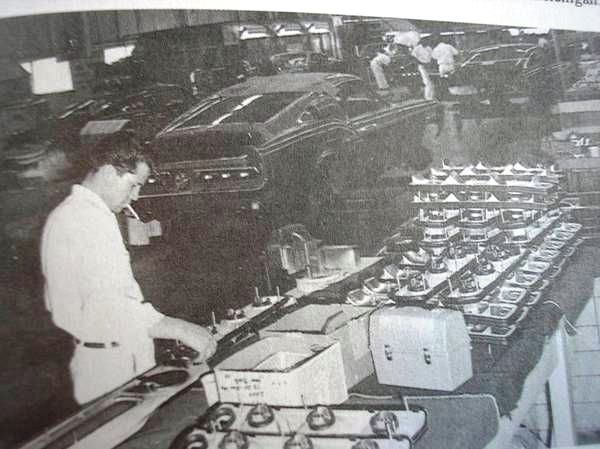
Most RCs weren't what you'd call a 'clean break.' For
example, tail light assemblies were made and wired in batches,
by one team. The assemblies were racked and stacked on shelves
ahead of the cars being run through the shop, a FIFO methodology
was not important. Reviewing The Data The filters for this query include
cars assembled (built) by Ford's San Jose plant on or before
November 30, 1966, and
Cars that are recorded as being 'completed' by Shelby American
on or before December 9, 1966.
-or- cars reported to have the lights by an owner, and/or cars
discovered from in-period photographs or videos.
View the data Exclusions V738-2, the red advertising 'GT 500' car, is not reflected in the attached queries because it was not assigned a Shelby VIN, and is therefore not in the database that the query is based on. Cars #0131 (Coupe) and #0139 (Convertible) would likely have received scoop lights based on their recorded 12/7/66 completion dates, however, the coupe and convertible body styles didn't have the cabin air extractors and therefore could not be fitted with the lights. These two cars have also been excluded from this query. The SRG is not convinced that the last cars on this list
(sorted by completion date) were factory-equipped with the
'scoop lights', however, we recognize this as owner-reported
information and are attempting to keep our active research
synchronized with the data published in SAAC '67 Registry. Statistics
See Also |
|
©2018–2026 The Shelby Research Group ▪ Where Knowledge is Freely Shared™ ▪ Disclaimer, Fair Use Notice, Contact Us |